Curated Resources on Social Determinants of Health
Introduction
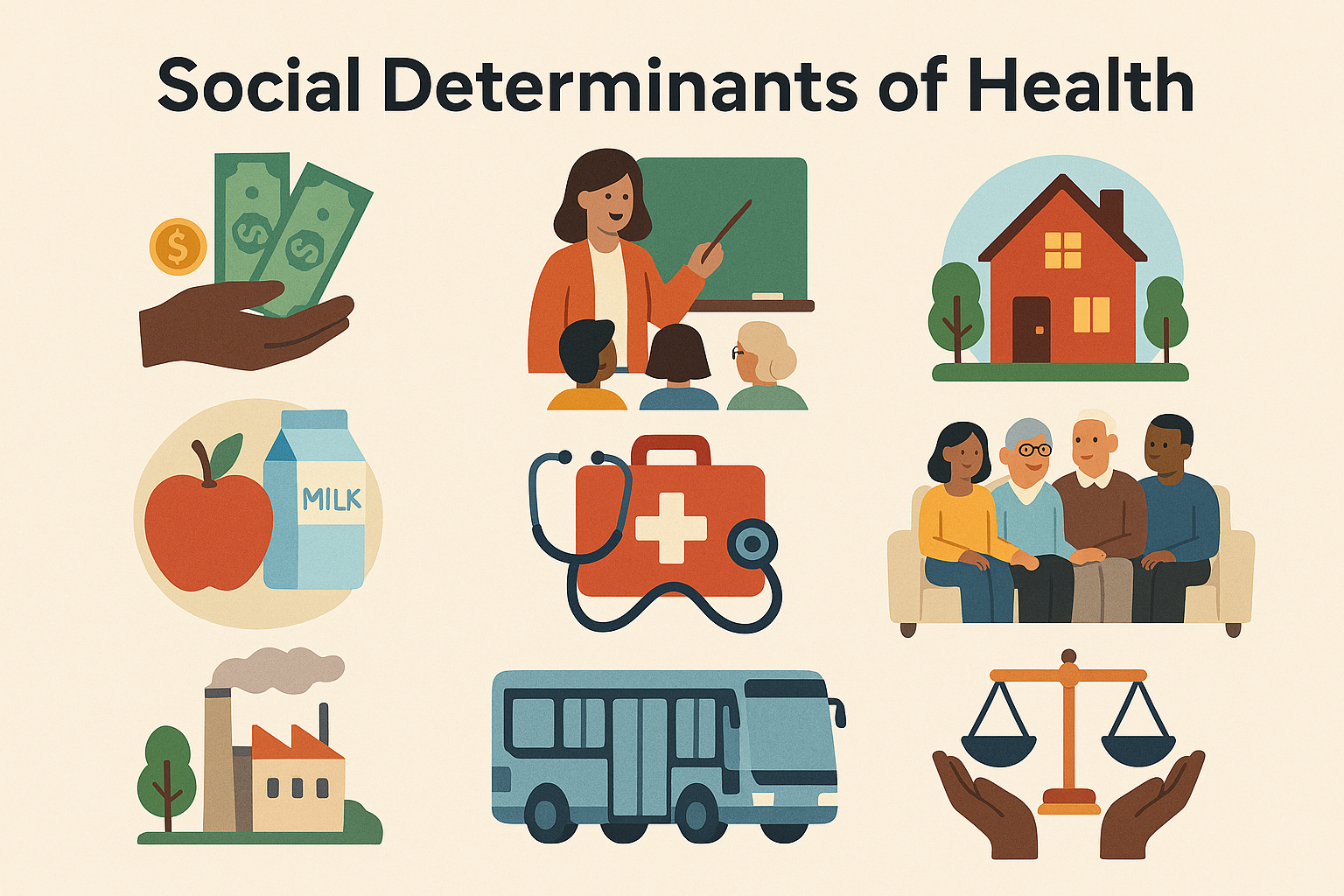
Understanding the social determinants of health is essential for delivering equitable and effective patient care. As a Medical Laboratory Technologist (MLT) in Ontario, my role is influenced not only by laboratory results but also by the broader context in which patients live. These resources provide insights into how income, housing, education, access to care, and culturally safe practices shape health outcomes. Exploring these references has helped me connect population-level evidence with practical strategies in the lab and beyond, reinforcing the importance of equity-driven decision-making in my professional practice.
Scholarly Resources:
1. Social Determinants of Unmet Primary Care Needs
Alemu, F. W., et al. (2024). Social determinants of unmet need for primary care: A systematic review. Systematic Reviews, 13, 252. https://doi.org/10.1186/s13643-024-02647-5
Annotation:
This review identifies income, mental health, and chronic conditions as predictors of unmet primary care needs in Canada. For MLTs, recognizing these determinants helps align laboratory testing with equitable access and informs collaboration with healthcare teams to improve patient outcomes.
2. Scholarly Reference: Healthy Living Initiatives and Social Determinants
Gore, D., & Kothari, A. (2012). Social determinants of health in Canada: Are healthy living initiatives there yet? International Journal for Equity in Health, 11(1), 41. https://doi.org/10.1186/1475-9276-11-41
Annotation:
This article explores the effectiveness of Canadian healthy living initiatives in addressing social determinants. It highlights gaps between policy intent and practical outcomes, emphasizing the need for targeted, evidence-informed interventions to reduce health inequities.
3. Scholarly Reference: Indigenous Lens Tool
Jumah, R., et al. (2023). Indigenous Lens Tool: Aligning health equity frameworks with Indigenous perspectives. Ontario Health. https://www.ontariohealth.ca
Annotation:
Offers guidance for incorporating Indigenous perspectives into equity-focused health planning. For MLTs, it reinforces culturally responsive practice and inclusive consideration of laboratory data in Indigenous health initiatives.
Policy and Government Resources:
1. Cultural Safety & Humility Standards
Government of British Columbia. (2022). Cultural Safety & Humility Standard (HSO 75000:2022). Province of British Columbia. https://www2.gov.bc.ca/gov/content/governments/technology-innovation/standards/cultural-safety
Annotation:
Establishes standards for culturally safe care in BC, reinforcing equity-focused practices. For MLTs, this guides respectful interactions with diverse patient populations and encourages consideration of cultural contexts in healthcare delivery.
2. B.C. Social Determinants of Health Value Set
Government of British Columbia. (2024, September 4). B.C. Social Determinants of Health Value Set. Province of British Columbia. https://www2.gov.bc.ca/gov/content/health/practitioner-professional-resources/health-information-standards/standards-catalogue/bc-social-determinants-of-health-standards
Annotation:
Provides standardized indicators for tracking social determinants in health data systems. For MLTs, awareness of these indicators informs how lab data can contribute to equity-informed decision-making and population health planning.
3. Social Determinants and Health Inequalities in Canada
Government of Canada. (2023). Social determinants of health and health inequalities. Public Health Agency of Canada. https://www.canada.ca/en/public-health/services/health-promotion/population-health/what-determines-health.html
Annotation:
Summarizes evidence linking social determinants to health outcomes across Canada. This resource highlights the role of healthcare professionals in mitigating inequities through evidence-based interventions and data-informed practice.
4. Ontario Public Health Standards
Government of Ontario. (2021). Ontario public health standards 2021. Ontario Ministry of Health. https://www.health.gov.on.ca/en/pro/programs/publichealth/oph_standards/docs/ophs_2021.pdf
Annotation:
Outlines provincial standards for health promotion and protection, emphasizing equity and evidence-informed programming. For MLTs, these standards guide participation in population health initiatives and integration of lab data into public health monitoring.
5. Health Equity Impact Assessment (HEIA) Tool
Ministry of Health and Long-Term Care. (2012). Health equity impact assessment (HEIA) tool. Ontario Ministry of Health. https://www.health.gov.on.ca/en/pro/programs/heia/
Annotation:
Provides a structured approach to assessing the impact of policies and programs on health equity. Useful for MLTs participating in projects or initiatives that aim to reduce inequities in healthcare delivery.
6. Health Equity Guideline
Ministry of Health and Long-Term Care. (2018). Health equity guideline. Ontario Ministry of Health and Long-Term Care. https://www.health.gov.on.ca
Annotation:
Offers foundational principles for integrating equity considerations into healthcare practice and planning, supporting MLTs in aligning lab services with equity-informed care strategies.
7. Ontario Health Social Determinants of Health Framework & Resource Guide
Ontario Health. (2025). Ontario Health Social Determinants of Health Framework & Resource Guide. Ontario Health. https://www.ontariohealth.ca
Annotation:
Provides a comprehensive framework for addressing social determinants in health system planning. MLTs can use this guide to contextualize laboratory data within population health strategies and promote equitable healthcare delivery.
8. Social Determinants of Health (WHO)
World Health Organization. (n.d.). Social determinants of health. https://www.who.int/health-topics/social-determinants-of-health
Annotation:
Defines the global framework for understanding social determinants and their influence on health inequities. For MLTs, it emphasizes the importance of considering environmental, social, and economic factors alongside biological data to inform patient care and health system planning.
Summary:
Understanding social determinants of health is critical for professionals in the laboratory and clinical settings. These resources show that improving equity requires integrating social, biological, and digital data; applying culturally safe practices; and aligning policy, practice, and community needs. MLTs can use this knowledge to support evidence-informed decision-making, contribute to health system planning, and advance equitable patient care.