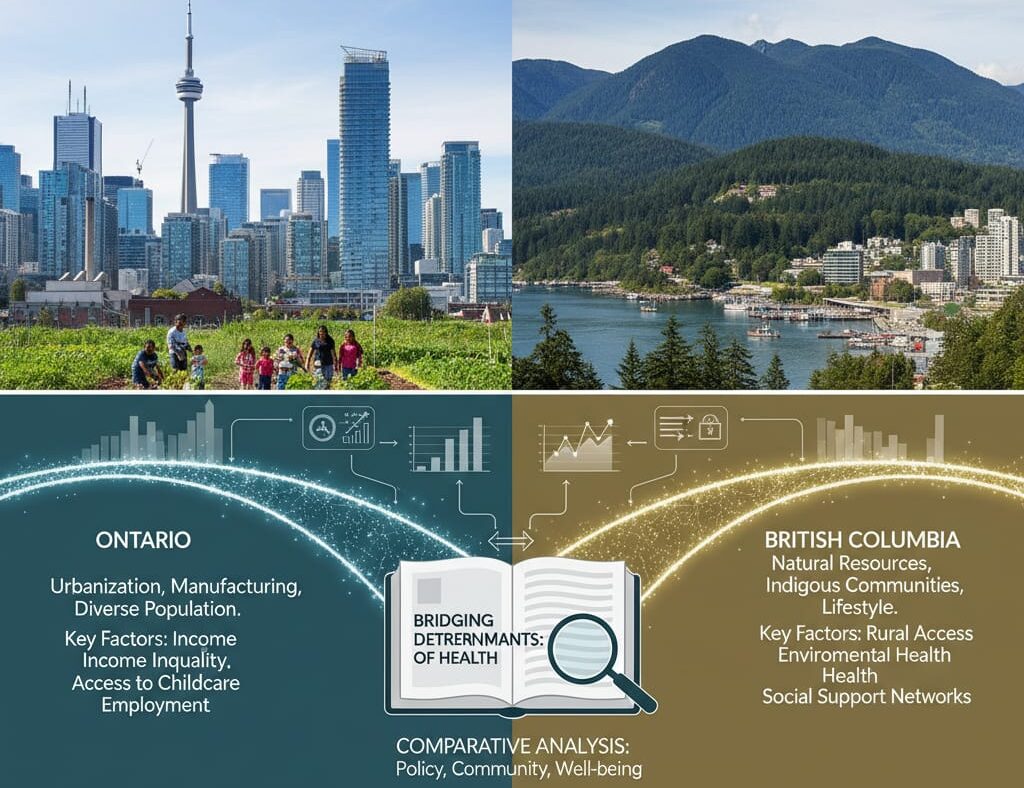
Bridging Perspectives: A Comparative Analysis of the Social Determinants of Health in Ontario and British Columbia
Collaborators:
Noor Shawkat, Medical Laboratory Technologist (MLT), Ontario
Banveen Bhullar, Nuclear Medicine Technologist (NMT), British Columbia
Introduction
Health outcomes are influenced by a complex interplay of biological, behavioural, social, and structural determinants, and provinces in Canada are striving towards health equity using diverse approaches that are tailored to their policies, health system features, and priorities. In this blog, we employ a Socioecological Model to explore how operational and structural strategies in Ontario and British Columbia affect health outcomes at multiple levels. Using practitioner voices, such as Noor, an MLT in Ontario, and Banveen, an NMT in British Columbia, to describe how system-level frameworks are operationalized in frontline practice, and how they subsequently impact patient outcomes and health equity
Ontario: Operational / Frontline Implementation Level
Ontario emphasizes practical, frontline tools that enable providers to hardwire equity into routine care and decision-making, and these are:
- Health Equity Impact Assessment (HEIA):
Tool is a proactive planning tool that enables teams to predict where a program or service may create or exacerbate inequities and redesign and delivery prior to launch to mitigate risk, as outlined by the Ministry of Health and Long-Term Care in 2012.
- The Indigenous Lens Tool:
Is a planning and review tool that incorporates Indigenous perspectives into program design and delivery to reduce barriers, enhance cultural safety, and improve access and outcomes for Indigenous peoples, according to Jumah et al. in 2023.
- Ontario Health SDoH Framework and Resource Guide:
Provides a practical, step-by-step guide to help providers identify and address social determinants of health within everyday workflows, from intake through to follow-up, consequently ensuring that equity considerations consistently inform patient care and system processes, as stated by Ontario Health in 2025.
Case Examples:
CASE EXAMPLE 1: Addressing Food Insecurity in a Community Clinic
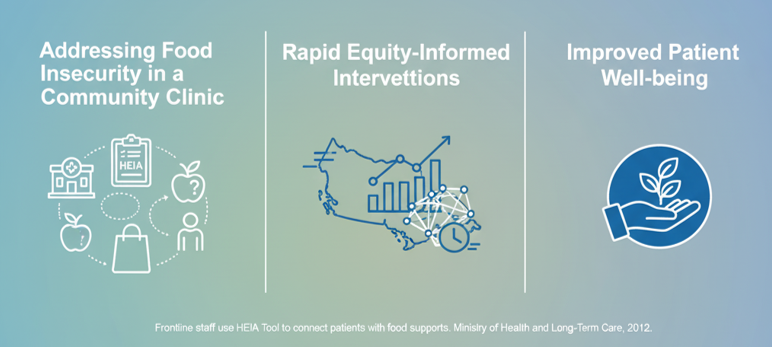
where frontline staff use the HEIA Tool to flag patients at risk of food insecurity within clinic workflows, and by pre-anticipating inequities before a program is rolled out, teams are able to more quickly connect patients with local food supports and adjust care plans, enabling more rapid equity-informed interventions and improved patient well-being (Ministry of Health and Long-Term Care, 2012).
CASE EXAMPLE 2: Indigenous Prenatal Program
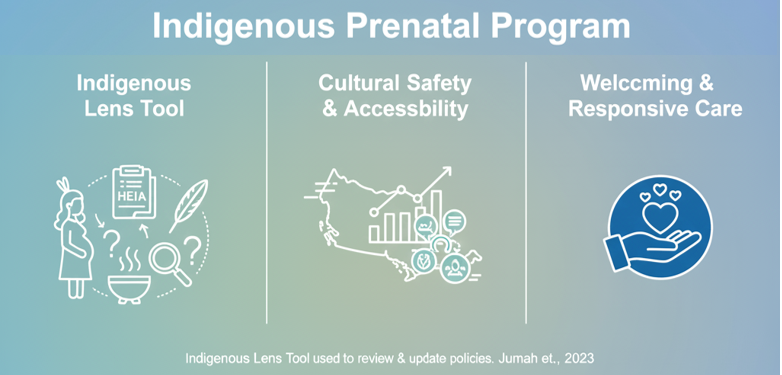
An Indigenous prenatal program uses the Indigenous Lens Tool to review and update policies to ensure language supports are available and cultural practices are accommodated, which increases accessibility and strengthens cultural safety, thereby leading to a more welcoming and responsive service for Indigenous patients (Jumah et al., 2023).
CASE EXAMPLE 3: Community Partnership for Housing Stability
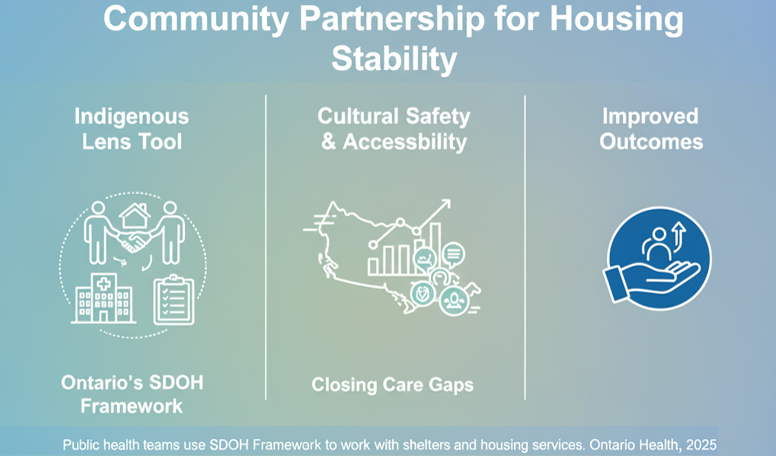
Public health teams use Ontario’s SDoH Framework to work with shelters and housing services at the point of discharge, thereby closing care gaps for unhoused patients, supporting access to medication and follow-up, and leading to improved adherence and long-term outcomes (Ontario Health, 2025).
Analysis:
The approach in Ontario is operational, allowing for rapid and tailored interventions at the coal face, but consistent implementation across organizations is still necessary to achieve system-wide impact.
British Columbia: Structural / System-Wide Level
In BC, equity is built into the structure of the health system by embedding it in policies, standards and system-wide mandates, which means equity is not a programme, but rather a requirement across organizations, supported by standardized data practices, cultural safety expectations and province-wide directives that hold the system accountable over time.
- B.C. Social Determinants of Health Value Set:
Ensures that key SDoH data, such as housing, income, education, and Indigenous identity, are collected by health organizations in a standardized way, because this ensures consistency in data collection across facilities (Government of British Columbia, 2024).
- Cultural Safety and Humility Standard (HSO 75000:2022):
Mandatory training and organizational policies are also essential to embed culturally safe practices throughout the health care system, so that care is consistent and there is accountability for the care provided (Government of British Columbia, 2022)
- Fraser Health Indigenous Education Initiative:
At an operational level, all staff are expected to complete a four-hour cultural safety course prior to starting in their position because this ensures that humility and cultural competence are imbedded in all positions and settings (Government of British Columbia, 2022).
Case Examples:
1. CASE EXAMPLE 1: Systematic SDoH Data Collection
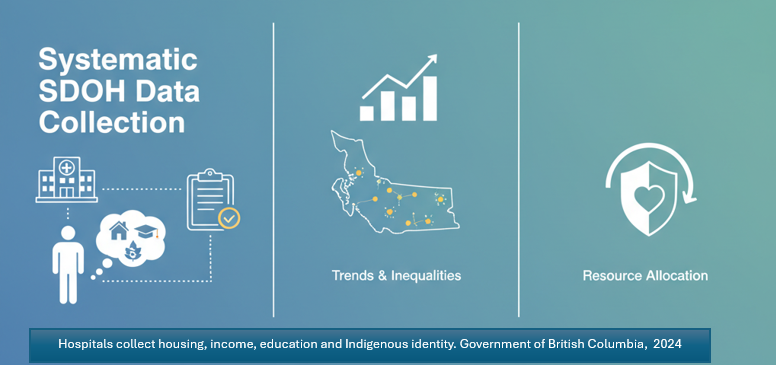
Hospitals use a standardized tool to collect social determinants of health, such as housing, income, education, and Indigenous identity, so the province can identify trends, inequalities, and areas where resources are needed most, as stated by the Government of British Columbia in 2024.
2. CASE EXAMPLE 2: Culturally Safe Mental Health Service
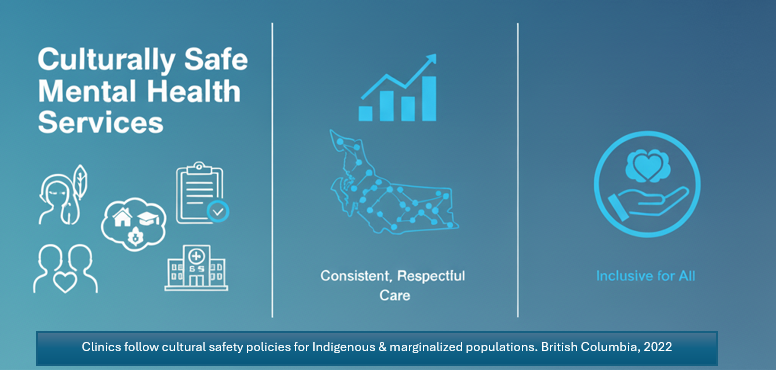
Culturally Safe Mental Health Services Clinics are required to follow cultural safety policies and training to ensure that Indigenous and other marginalized populations receive consistent, respectful, and inclusive mental health care across settings (and not just in specialized programs) (Government of British Columbia, 2022).
3. CASE EXAMPLE 3: Safe Injection Site Integration

British Columbia, offers harm reduction within health care through the provision of safe injection sites in hospitals. Even though this has been shown to be controversial because it has been proven to decrease the death caused by overdose and increase opportunities for connection to health care, treatment, and social supports (Government of British Columbia, 2024)
Analysis:
Analysis reveals that while embedding equity into standards and policy can create a systemic accountability mechanism that will outlast individual programs, the real impact of this approach relies on its implementation at the frontline, which includes ongoing training, culturally safe practices, and meaningful engagement with patients and communities.
Comparative Insights: Complementary Approaches

Interpretation:
While Ontario has focused on developing on-the-ground practical tools and actions, BC has concentrated on building equity into policy and system standards, and collectively, both provinces show that actual progress on health equity requires both operational day-to-day tools and system-wide infrastructure
Professional Reflection
Working with Banveen has reinforced how much different roles and contexts for health equity implementation matter, because from the perspective of an MLT in Ontario, I like the practical tools that provide concrete practical applications to daily interventions. Banveen brought a more formalized and standardized approach rooted in BC policy and system directives, which consequently complemented my perspective. In the end, I think we both conclude that addressing health inequities requires a multi-level lens: changes in front line behaviours, organizational practices that support those changes, and structural arrangements that hard wire equity throughout the system.
Conclusion
Reducing health inequities is an inherently complex challenge because both operational and structural levels of action are required to change the trajectory of population health in Canada. What Ontario has accomplished is the creation of practical, frontline tools that allow clinicians to act in real time, while what BC has accomplished is the embedding of equity in policies and system standards to support long-term accountability. Therefore, together, the two provincial approaches provide a clear blueprint for the integration of multilevel determinants into routine healthcare practice
References
Government of British Columbia. (2022). Cultural Safety & Humility Standard (HSO 75000:2022) [PDF]. Province of British Columbia.
Government of British Columbia. (2024). B.C. Social Determinants of Health Value Set. Province of British Columbia. https://www2.gov.bc.ca/gov/content/health/practitioner-professional-resources/health-information-standards/standards-catalogue/bc-social-determinants-of-health-standards
Jumah, N. A., Kewayosh, A., Downey, B., Campbell Senese, L., & Tinmouth, J. (2023). Developing a health equity impact assessment ‘Indigenous Lens Tool’ to address challenges in providing equitable cancer screening for Indigenous peoples. BMC Public Health, 23(1), 2250. https://doi.org/10.1186/s12889-023-16919-7
Ministry of Health and Long-Term Care. (2012). Health equity impact assessment (HEIA) tool [PDF]. Ontario Ministry of Health and Long-Term Care. Retrieved from https://www.health.gov.on.ca
Ontario Health. (2025). Ontario Health Social Determinants of Health Framework & Resource Guide. Ontario Health. https://www.ontariohealth.ca