Curated Resources on Type 2 Diabetes Through a Multilevel Lens
Introduction
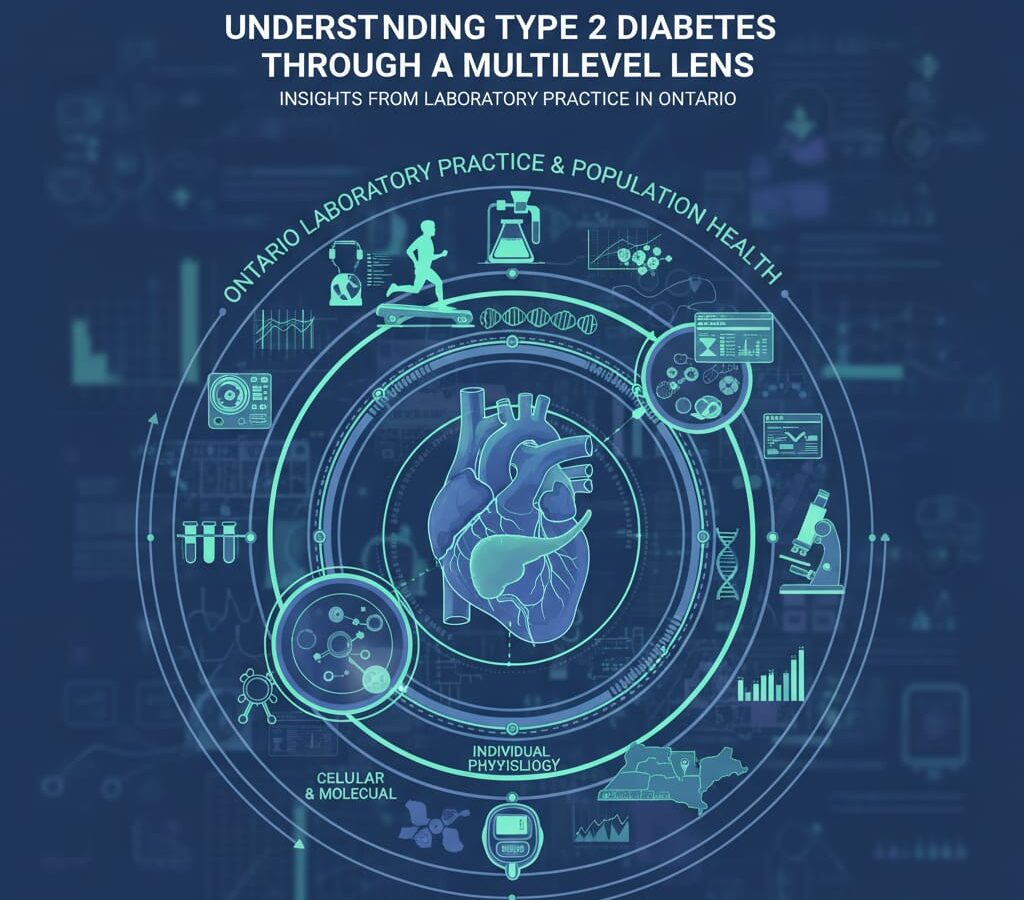
Type 2 diabetes (T2D) is influenced by determinants across multiple levels—policy, community, organizational, interpersonal, and individual. As a Medical Laboratory Technologist (MLT) in Ontario, understanding these levels enhances interpretation of lab results, informs patient-centered care, and supports evidence-based interventions. This curated resource collection demonstrates how multilevel frameworks, such as the Social Ecological Model (SEM), guide comprehensive approaches to chronic disease management.
Scholarly Resources:
1. A Multilevel Approach to Modeling Health Inequalities at the Intersection of Multiple Social Identities
Evans, C. R., McFarland, M. J., & Umberson, D. J. (2018). A multilevel approach to modeling health inequalities at the intersection of multiple social identities. Social Science & Medicine, 210, 136–146. https://doi.org/10.1016/j.socscimed.2018.05.034
Annotation:
This study demonstrates how structural, community, interpersonal, and individual factors intersect to influence health outcomes. Applying these insights to T2D allows MLTs to consider how social identities, behaviors, and biology collectively shape laboratory findings and patient outcomes.
2. Multilevel Social Determinants of Individual and Family Well-Being
Browne, D. T., et al. (2024). Multilevel social determinants of individual and family well-being. BMC Public Health. https://pmc.ncbi.nlm.nih.gov/articles/PMC11002224/
Annotation:
This research highlights the interaction of family, community, and societal determinants in shaping well-being. For T2D, the findings underscore the importance of interpersonal support systems in reinforcing adherence, lifestyle changes, and interpretation of lab results in context.
Government Resources:
1. Social Determinants of Health and Health Inequalities (Canada)
Public Health Agency of Canada. (2023). Social determinants of health and health inequalities. Government of Canada. https://www.canada.ca/en/public-health/services/health-promotion/population-health/what-determines-health.html
Annotation:
This federal resource outlines key determinants including income, education, housing, and social supports, operating across personal, social, and environmental levels. Understanding these factors helps MLTs interpret lab results within the broader structural context affecting T2D outcomes.
2. Ontario Public Health Standards 2021
Government of Ontario. (2021). Ontario public health standards 2021 [PDF]. Ontario Ministry of Health. https://www.ontario.ca/page/ontario-public-health-standards-requirements-programs-services-and-accountability
Annotation:
These standards establish expectations for disease prevention and chronic disease management in Ontario. They guide MLTs in applying diagnostic testing for T2D consistently and equitably within provincial programs and integrated care initiatives.
3. Ontario Health Social Determinants of Health Framework & Resource Guide
Ontario Health. (2025). Ontario Health social determinants of health framework & resource guide. Ontario Health. https://www.ontariohealth.ca
Annotation:
This guide provides actionable tools for integrating SDOH into organizational planning. For T2D management, it informs lab testing priorities, follow-up strategies, and equity-focused care planning.
Summary
This curated resource collection illustrates how a multilevel lens, anchored in the Social Ecological Model, informs Type 2 diabetes management in Ontario. From policy and community influences to individual behaviors, each resource demonstrates the interconnected determinants shaping patient outcomes. For MLTs, integrating lab data with multilevel insights supports patient-centered care, evidence-informed decision-making, and equity-driven interventions across the continuum of chronic disease management.